
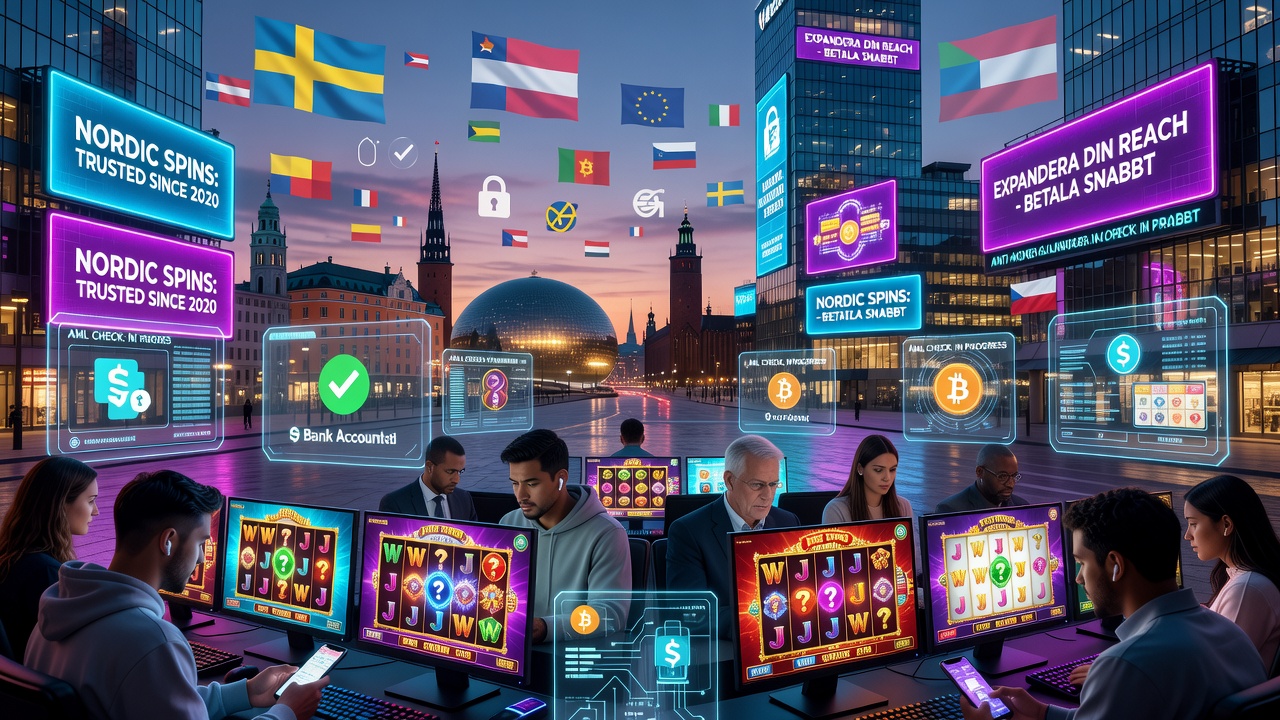
Two years after launch, a slot-focused online casino operation has pushed further into international markets, rolling out localized websites in English and Swedish. The expansion reflects a familiar pattern in digital gambling: platforms that start with a narrow regional footprint quickly scale toward multilingual, multi-currency operations once they establish a stable player base and payment infrastructure.
Why Multi-Market Expansion Matters
Launching parallel language sites is rarely just a translation exercise. It signals that an operator is targeting distinct regulatory environments, each with its own licensing expectations, advertising restrictions, and consumer-protection rules. Sweden, for instance, operates under a licensing regime that imposes specific requirements on deposit limits, self-exclusion tools, and marketing conduct. Operators entering such markets must adapt their compliance posture accordingly, not simply duplicate a product built for a less regulated jurisdiction.
For players, this expansion can mean more game variety and competitive promotional offers, but it also means navigating different legal protections depending on which version of a site they use. A platform licensed and supervised in one country may offer stronger dispute-resolution mechanisms than an unregulated or loosely regulated version of the same brand elsewhere.
Payments, Verification, and the Trust Gap
Among the recurring concerns raised by players is the handling of withdrawals and the insistence that payouts go only to a verified, registered bank account. This is standard industry practice tied to anti-money-laundering obligations, not an arbitrary hurdle. Verification processes exist to confirm that the person withdrawing funds is the same person who deposited them, reducing fraud and ensuring compliance with financial regulations.
That said, slow or inconsistent payment processing remains one of the most common sources of player frustration across the sector. The use of newer payment rails, including cryptocurrency transfers, has been promoted by some operators as a way to speed up withdrawals. Processing speed on a blockchain network, however, says nothing about an operator's overall reliability or licensing status - the two issues are often conflated in marketing material but should be assessed separately.
- Verified bank accounts and identity checks are a regulatory requirement, not a sign of exceptional service.
- Jurisdiction-specific licensing affects what protections a player actually has.
- Fast crypto settlement does not substitute for a transparent complaints or dispute process.
Game Mechanics and the Limits of Strategy
Marketing around slot titles frequently emphasizes features such as wild symbols, mystery icons, multiple paylines, and themed bonus rounds. These are legitimate product design elements that shape the player experience, but they do not change the underlying mathematics of a slot machine. Outcomes are governed by random number generation calibrated to a fixed return-to-player percentage over the long run. No sequence of spins, no personal "algorithm," and no informal tip shared on social media alters that structure.
This point matters because anecdotal claims about winning systems circulate widely, sometimes from individuals presenting themselves as experienced players. Treating such claims skeptically is reasonable. Slot outcomes are independent events; past results have no bearing on future ones, regardless of how a game's theme or bonus mechanics are described.
Consumer Safeguards Still Matter Most
As operators broaden their footprint and diversify payment options, the practical questions for players remain consistent: is the operator licensed in the jurisdiction being accessed, how are complaints handled, and what tools exist to manage spending. Problem gambling research has consistently linked unclear terms, aggressive promotional tactics, and weak verification standards to poorer outcomes for vulnerable users. Reading an operator's terms, understanding withdrawal conditions before depositing, and treating promotional bonuses as marketing rather than guaranteed value remain the most reliable forms of protection available to any player.