
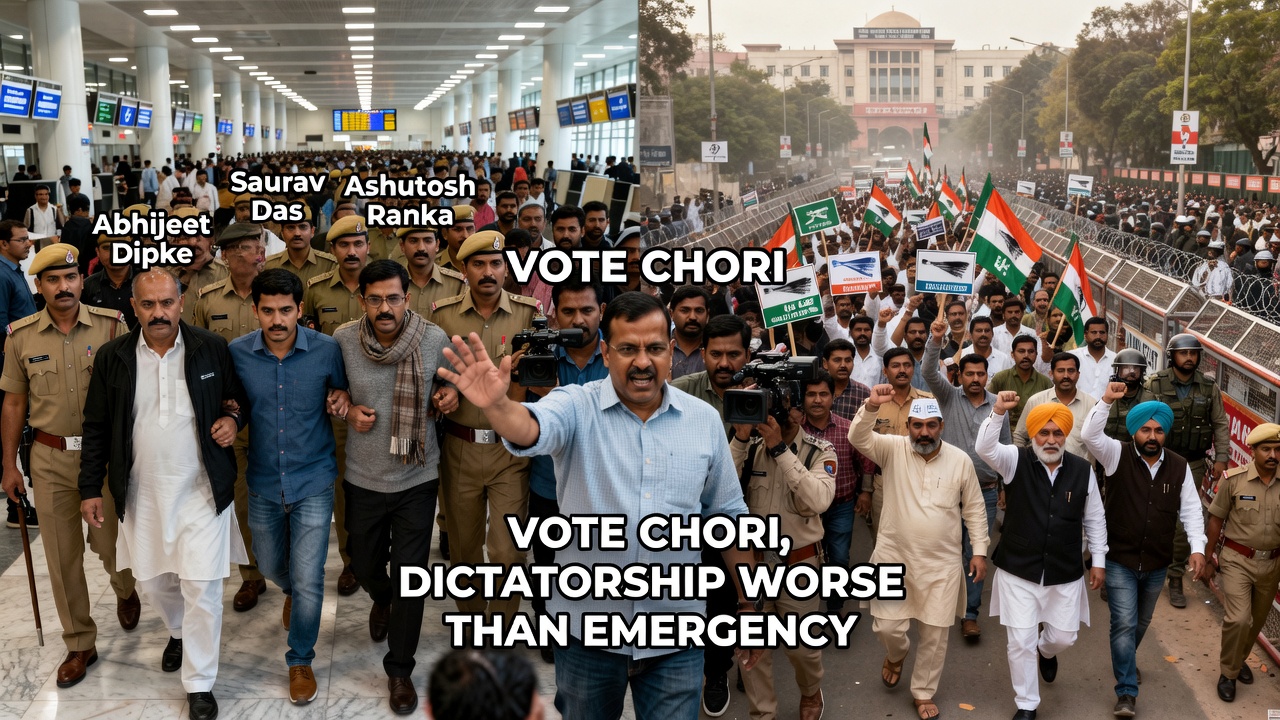
A political standoff over India's electoral process has moved from an airport terminal to the streets of Chandigarh within hours. Three leaders associated with the Citizens for Justice Party's campaign were detained at Delhi airport after landing, before they could reach Jantar Mantar to press for the resignation of Chief Election Commissioner Gyanesh Kumar. The episode has since widened into a broader confrontation involving the Aam Aadmi Party, Punjab leadership, and the poll body itself.
What Happened at the Airport
Abhijeet Dipke, Saurav Das and Ashutosh Ranka were intercepted shortly after their flight landed in Delhi. Their intended destination, Jantar Mantar, has long served as the capital's designated protest ground, making the detention notable less for its location than for its timing - before any public assembly had even begun. Arvind Kejriwal responded sharply, calling the action "worse than the Emergency" and accusing the Centre of running a "dictatorship" tied to allegations of "vote chori," or vote theft. Such language signals how quickly a procedural dispute over electoral rolls has been recast as a constitutional argument about dissent itself.
The Chandigarh March and Its Containment
AAP subsequently organised a march toward the Chief Electoral Officer's office in Chandigarh, aiming to gherao the building. Police barricades halted the demonstration before it reached its target. Several participants were detained, including senior AAP figure Manish Sisodia, alongside Punjab leaders such as Harpal Singh Cheema. The involvement of state-level leadership transformed what began as a Delhi-centric dispute into a Punjab political event, with AAP using its governing position in the state to amplify the protest's reach and legitimacy.
The Core Dispute Over Voter Rolls
At the centre of this stands a disagreement over the revision of voter lists, a process the Election Commission conducts periodically to update electoral rolls. Opposition parties, led here by AAP, allege the revision process has been manipulated or mishandled in ways that disadvantage certain voters. The Election Commission and the central government have rejected these claims outright, maintaining that the revision follows established procedure. Disputes over voter-list accuracy are not new in Indian politics, but the demand for a sitting CEC's resignation marks an unusually direct escalation, moving the conflict from procedural objection to a challenge against the institution's leadership itself.
Why This Matters Beyond the Protest Site
The detentions before any protest activity occurred raise questions about the threshold at which preventive action becomes restriction of assembly rights. This is a recurring tension in Indian public order law, where authorities can detain individuals deemed likely to cause disturbance, even absent any actual breach. Critics argue this discretion is applied unevenly depending on who is protesting and against whom. For the Election Commission, the stakes are different but equally serious: public confidence in electoral administration depends on perceived neutrality, and sustained allegations of list manipulation, regardless of their factual basis, can erode that trust over time. The spread of arrests from Delhi to Chandigarh suggests neither side intends to de-escalate, turning a dispute over bureaucratic procedure into a wider test of how protest, policing and institutional accountability intersect in the current political climate.