
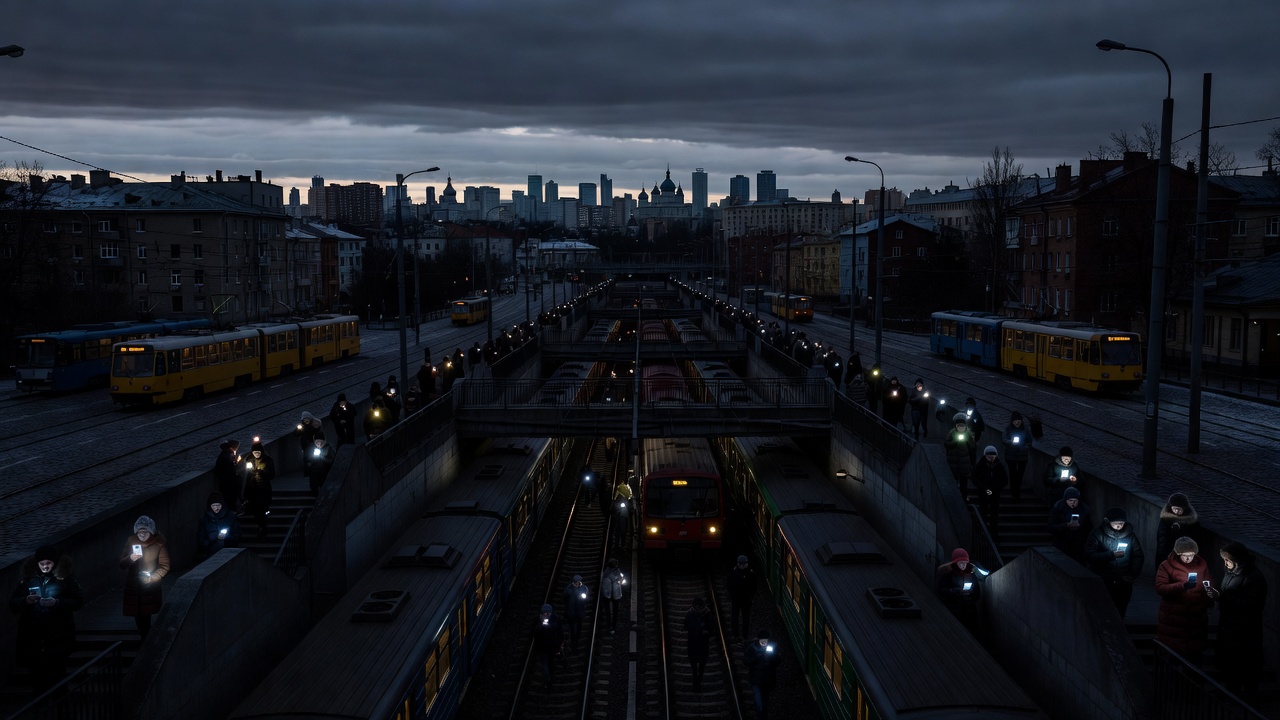
Kyiv went dark after Russian strikes hit Ukraine's energy infrastructure, halting all three metro lines and cutting power to trams, trolleybuses and homes across the capital. Residents used phone flashlights to find their way through unlit streets and underground passages as emergency outages rippled through the city. Ukrainian officials cautioned that the attacks could intensify as colder weather sets in, raising the stakes for a population already accustomed to rationed electricity.
A Grid Under Repeated Pressure
Ukraine's power network has been a recurring target since the full-scale invasion began, and each wave of strikes compounds damage that repair crews have only partially addressed. Metro systems, which double as both transport and air-raid shelters in many Ukrainian cities, depend on stable electricity to move trains and ventilate tunnels. When that supply fails, the disruption is immediate and visible: trains stop between stations, signals go dark, and passengers are left to make their way out on foot.
Trams and trolleybuses, which draw power directly from overhead lines rather than onboard fuel, are even more exposed to outages. Their simultaneous failure alongside the metro points to damage at a structural level in the grid rather than an isolated substation fault.
Why Winter Changes the Calculus
Seasonal timing matters. Heating, water pumping and hospital operations all lean harder on electricity once temperatures drop, meaning the same level of grid damage causes more hardship in December than in June. Ukrainian authorities have warned in the past that attacks on energy infrastructure tend to cluster around the colder months, when the human cost of blackouts is highest and the psychological pressure on the civilian population is greatest. That pattern is part of why officials are flagging the risk of intensified strikes now, rather than waiting for damage to accumulate further.
Civilian Life Amid Rolling Outages
For residents, the practical response has become familiar: power banks, backup lighting and contingency routes for getting to work or school when transit stalls. Emergency outages are often announced with little notice, forcing households and businesses to adapt in real time. The image of commuters lighting their way with phone screens through metro corridors has recurred throughout the war, a small but telling indicator of how deeply infrastructure attacks reach into daily routines far removed from the front line.
- All three Kyiv metro lines were temporarily halted
- Trams and trolleybuses lost power alongside the metro
- Residents relied on phone flashlights in dark streets and tunnels
- Officials warned of possible escalation in strikes as winter approaches
The Broader Stakes
Energy infrastructure has effectively become a front of its own in this conflict, separate from territorial fighting but no less consequential. Restoring and hardening the grid requires equipment, technical expertise and sustained investment, much of it coordinated with international partners. Each strike forces a choice between emergency patchwork and longer-term reinforcement, a tension that will likely define how Kyiv and other Ukrainian cities manage the coming winter months.