
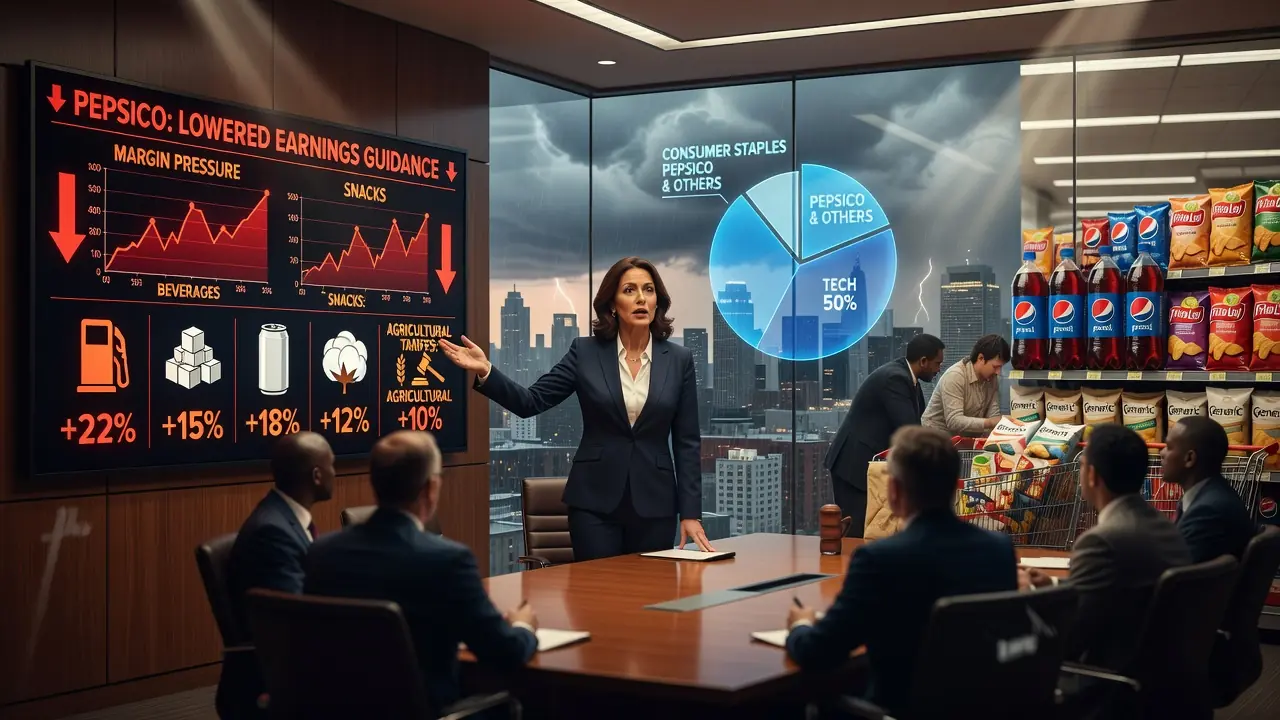
PepsiCo's latest earnings report landed with a thud investors didn't expect: lowered guidance, margin pressure, and an admission that shoppers are trading down to cheaper products. The company's own CEO said she doesn't feel good about the beverage industry right now. That kind of language from a sector leader tends to travel fast through markets already nervous about where consumer resilience ends and strain begins.
Reading the Signal Correctly
The instinct to call this a warning sign for the broader market is understandable, but the picture is more layered than a single earnings call. PepsiCo's stock actually rose after the report, partly because management signaled openness to separating its beverage and snack businesses - a structural shift investors have floated for years and one the company had previously resisted. That alone complicates the narrative. A stock doesn't typically rally on bad news unless the market sees something else worth pricing in.
At the same time, the underlying cost pressures are real and well documented across commodity markets: diesel, cotton, sugar, aluminum, and various agricultural inputs have all moved higher, compounded in places by tariffs still working through supply chains. Companies with heavy exposure to physical goods and logistics - snack and beverage makers among them - are natural early indicators of that pressure because they can't hide behind software margins the way much of the tech sector can.
Why Tech's Dominance Changes the Math
Technology and tech-adjacent companies now make up roughly half of the S&P 500's weight, which means earnings strength in that corner of the market can mask weakness elsewhere. PepsiCo, Constellation Brands, and similar consumer names sit far from that center of gravity. Constellation's own report this week showed a similar pattern - shipments held up, but "depletions," the industry term for product actually moving off retail shelves to consumers, declined. That's a subtler but arguably more honest gauge of real demand than headline shipment figures.
None of this proves a broader downturn is coming. It does suggest that the consumer-facing side of the economy is absorbing cost increases unevenly, with lower- and middle-income shoppers showing more sensitivity to price than headline spending data always captures. Whether that pressure stays contained to packaged food and beverage, or spreads into other consumer categories reporting in the coming weeks, is the real question worth watching.
The Starbucks-Chipotle Rumor and What It Reveals
Separately, reports have circulated - via the Financial Times and other outlets - that Starbucks and Chipotle have discussed some form of combination, a deal that would pair two brands now tied to the same executive, Brian Niccol, who led Chipotle's turnaround before taking the top job at Starbucks. Nothing has been confirmed, and the idea faces real structural hurdles: large consumer and retail mergers have a historically poor track record, financing costs remain elevated, and both companies would need to justify the deal to skeptical shareholders in a capital-constrained environment.
The rumor matters less for its likelihood than for what it reflects - a moment when established consumer brands are reassessing structure, not just pricing, as they search for growth. Whether that takes the form of a corporate split, as PepsiCo is weighing, or a speculative tie-up, as floated for Starbucks and Chipotle, the underlying driver is the same: companies built on physical goods and in-person consumption are under pressure to prove they can still grow margins in a tighter spending environment.