
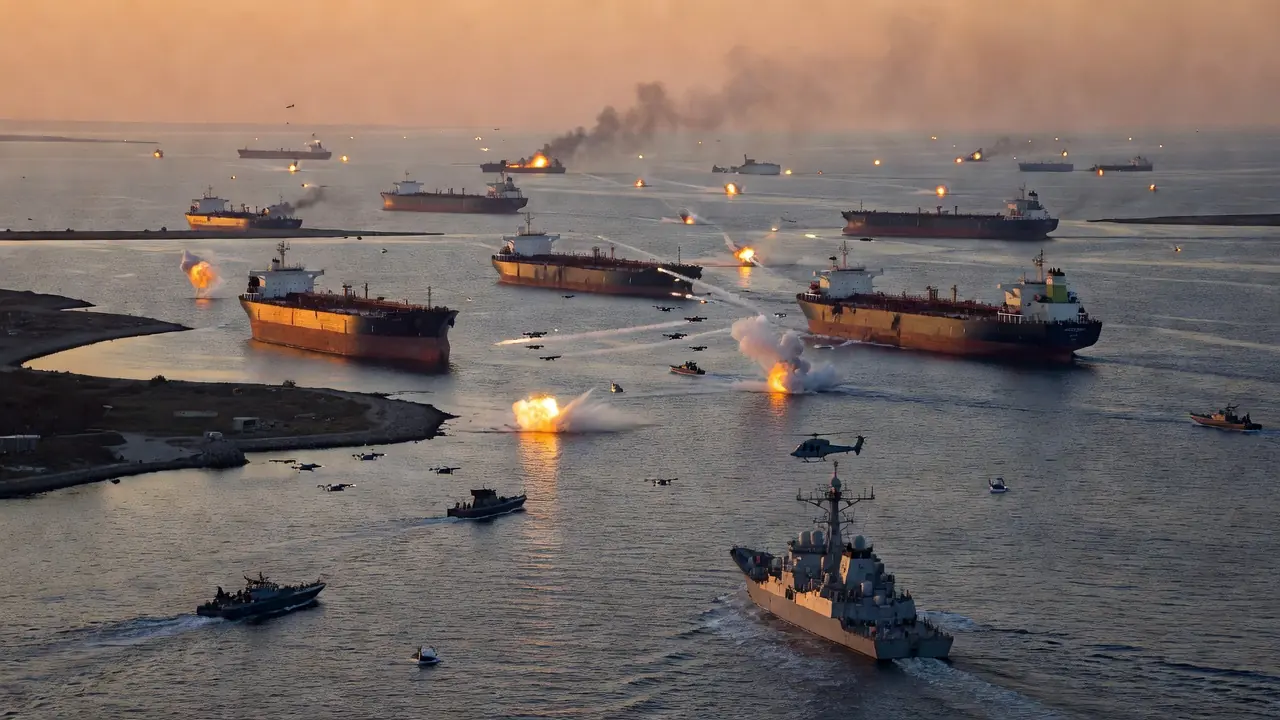
A waterway that carries a significant share of the world's seaborne oil traffic has become the setting for a quiet, sustained campaign of drone and missile attacks on commercial vessels. According to confidential data cited by The New York Times, Iranian forces have launched strikes on ships in or near the Strait of Hormuz on a near-daily basis, with the real tally reportedly running into dozens of incidents each week. The Islamic Revolutionary Guard Corps has now effectively acknowledged the campaign, even as the United States continues escorting vessels through the strait without entering direct military confrontation.
A Chokepoint Under Constant Pressure
The Strait of Hormuz is the narrow passage between the Persian Gulf and the Gulf of Oman through which a large portion of global crude exports must pass. There is no practical alternative route for much of this traffic, which is precisely why the waterway has long been treated as a pressure point in confrontations between Iran and Western powers. What distinguishes the current pattern, as described in the reporting, is its frequency and apparent routinization. Rather than occasional, high-profile incidents, the picture that emerges is one of sustained low-intensity harassment, conducted often enough that it has become a background condition of operating in the region rather than an exceptional event.
Why Oil Markets Have Not Reacted More Sharply
Despite the scale implied by this reporting, oil exports from the Gulf have reportedly recovered, a fact that may seem counterintuitive given the frequency of attacks described. The explanation likely lies in how shipping companies, insurers and naval escorts have adapted. Vessels can reroute, delay, or travel in protected convoys; insurers price risk into premiums rather than halting coverage; and the U.S. naval presence, even without direct retaliation, provides enough deterrence and reassurance to keep cargo moving. This is a familiar dynamic in high-risk maritime zones: markets absorb chronic risk through pricing and logistics rather than through dramatic shifts in volume, as long as the disruption stays below a threshold that would force a wholesale rerouting of trade.
Strategic Restraint and Its Limits
Washington's posture, continuing to escort commercial shipping while avoiding direct strikes on Iranian forces, reflects a calculated effort to manage the situation without triggering a broader military escalation. This restraint carries its own risks. Each unanswered strike can be read by Tehran as evidence that the costs of continued pressure remain low, while shipping companies and insurers are left to absorb an ambiguous and shifting threat. Analysts quoted in the reporting describe the strait as remaining highly dangerous precisely because this equilibrium is fragile: a single miscalculation, an attack causing significant casualties, or a vessel linked to a different nation's flag could change the political calculus on either side rapidly.
What This Means Beyond the Region
For global trade and energy markets, episodes like this are a reminder that critical infrastructure can operate under chronic, low-visibility stress for extended periods without triggering immediate, visible consequences. That dynamic complicates both public understanding and policy response. The absence of a single dramatic incident does not mean the underlying risk has diminished. It often means the risk has simply been distributed across many smaller, cumulative events, each one manageable in isolation but collectively reshaping how commercial shipping, insurers and governments plan for the possibility that the pattern could, at any point, shift decisively.