
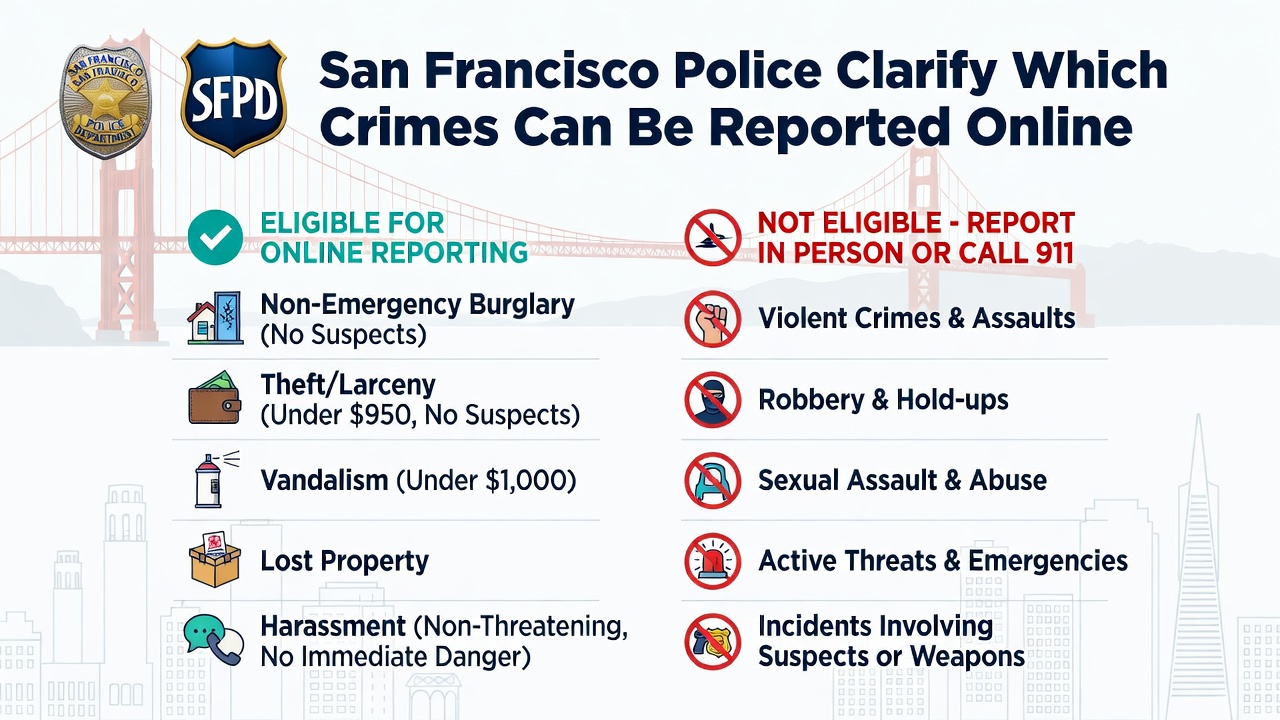
San Francisco residents now have a clearer road map for deciding how to report a crime: when to dial 9-1-1, when to use the non-emergency line, and when an online filing will actually be accepted. The San Francisco Police Department has drawn firmer lines around its online reporting portal, specifying exactly which incidents qualify and which ones require either a phone call or an in-person visit to a station.
Why the Distinction Matters
Emergency lines exist to move resources toward immediate danger - an active crime, a weapon involved, or a known suspect location. Every call routed incorrectly to 9-1-1 competes with a genuine emergency elsewhere in the city. The department's guidance is built around that logic: reserve 9-1-1 for threats unfolding right now, use the non-emergency number at 1-415-553-0123 for incidents that have already occurred but still need an officer's attention, and use the online portal for lower-risk property crimes that don't require a dispatched response.
This triage system reflects a broader pattern among urban police departments nationwide, where digital self-service tools have become a practical way to manage call volume without diverting patrol officers from active threats.
What Can and Cannot Be Filed Online
The portal, powered by CopLogic, accepts a defined list of incidents - vehicle burglary, vandalism, harassment calls, lost property, identity and cryptocurrency theft, mail theft, phone scams, trespassing, and certain regulatory violations tied to alcohol and tobacco permits. Theft reports qualify too, unless the stolen item is a firearm, passport, license plate, vehicle, or an electric bike with a serial number.
- Residential burglaries, robberies, and stolen vehicles require direct police contact - either by phone or in person.
- Traffic collisions and hit-and-runs fall outside the online system entirely.
- Crimes on BART property, freeways, the Golden Gate Bridge, or university campuses fall under separate jurisdictions, each with its own police agency and contact line.
Filing outside these categories doesn't just cause delay - the department notes that any report submitted online without meeting the listed criteria will be redirected, meaning the person reporting still has to go through the proper channel afterward.
Accessibility and the Fine Print
For residents without internet access or an email address, 3-1-1 offers 24-hour assistance in more than 175 languages, a detail that matters in a city with significant linguistic diversity. The department also runs a separate Incident Report Request Portal for retrieving copies of filed reports, including traffic collisions and domestic violence cases, with account tracking built in for security.
One point carries legal weight beyond convenience: filing a false police report is a criminal offense under California Penal Code Section 148.5, covering everything from fabricated incidents to misstated property values. Every online submission is reviewed by an officer before being finalized, and the department has stated it will pursue prosecution for hoax or "joke" reports submitted through the digital system - a reminder that online convenience doesn't lower the legal stakes of what gets reported.