
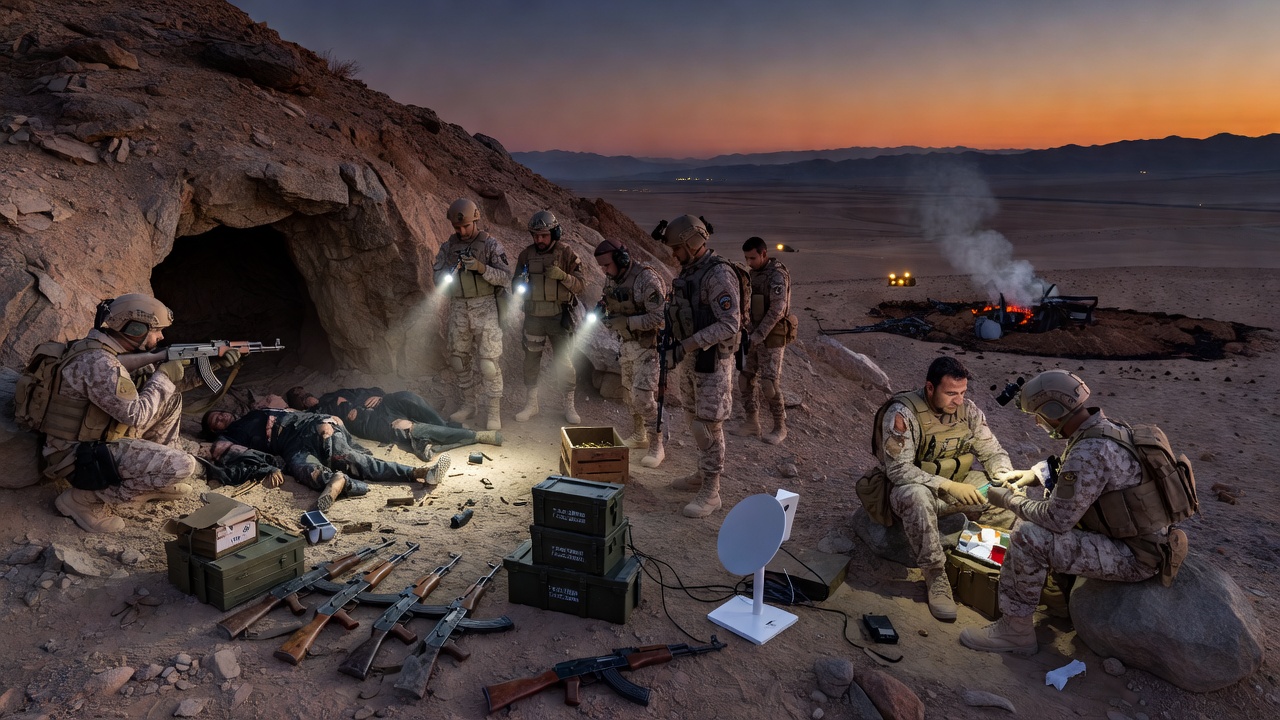
Iran's Islamic Revolutionary Guard Corps says its forces have dismantled a suspected militant cell operating in Sistan and Baluchestan province, a restive region bordering Pakistan. According to the IRGC, two suspected fighters were killed during the operation, and security forces recovered weapons, ammunition and a Starlink satellite internet terminal from a hideout. The announcement comes alongside a separate report that an IRGC serviceman died in a roadside bomb attack elsewhere in the same province.
A Border Region With a Long History of Unrest
Sistan and Baluchestan sits at the intersection of Iran, Pakistan and Afghanistan, a geography that has made it a persistent flashpoint. The province is home to a sizable Baluch population and has for decades seen friction between local armed groups, smuggling networks and Iranian security forces. Tehran routinely describes these groups as terrorist organizations, while the area's isolation and underdevelopment have long fueled grievances that outside observers link to the recurring violence. Attacks on security personnel, including roadside bombings, have been reported periodically in the region, and the IRGC maintains a heavy military and intelligence presence there as a result.
Why a Satellite Internet Terminal Matters
The mention of a Starlink terminal in the IRGC's account is notable beyond the immediate operation. Satellite internet services have become a flashpoint in Iran's broader information-control strategy, since they allow users to bypass state-controlled networks and censorship infrastructure. Iranian authorities have previously expressed concern over the use of such devices by both political dissidents and armed groups, arguing they enable coordination and communication outside official surveillance. For militant networks operating in remote border terrain, satellite connectivity can offer a practical alternative to conventional mobile networks, which are sparse or easily monitored in these areas. The presence of such equipment in a counterterrorism raid underscores how satellite communication technology, originally designed for civilian connectivity in underserved regions, has become entangled in questions of state security and surveillance evasion.
Reading the Timing and the Claims
Reports of this kind, issued directly by the IRGC, are difficult to verify independently, and Iranian state-linked security statements have historically framed events through specific political and institutional lenses. The announcement of a successful raid alongside news of a serviceman's death suggests an effort to balance an operational win against an acknowledged loss, a pattern consistent with how Iranian security bodies often communicate during periods of intensified activity in border provinces. Analysts tracking the region tend to treat such claims as part of a broader pattern of recurring, low-intensity conflict rather than isolated incidents, with each side's narrative shaped by its own strategic interests.
Broader Implications for Regional Stability
Episodes like this reinforce the fragility of Iran's southeastern frontier, where security operations, cross-border smuggling and militant activity frequently intersect. For Pakistan, instability on the Iranian side of the border carries its own implications, given shared ethnic Baluch populations and historical cross-border movement. The recurring nature of these incidents also raises questions about the long-term effectiveness of purely security-focused responses, as opposed to addressing the economic and political grievances that often underpin unrest in marginalized border regions.