
How to Choose a Safe Online Entertainment Platform: Licensing, Privacy, Account Management, Mobile Apps, and the Latest Trends
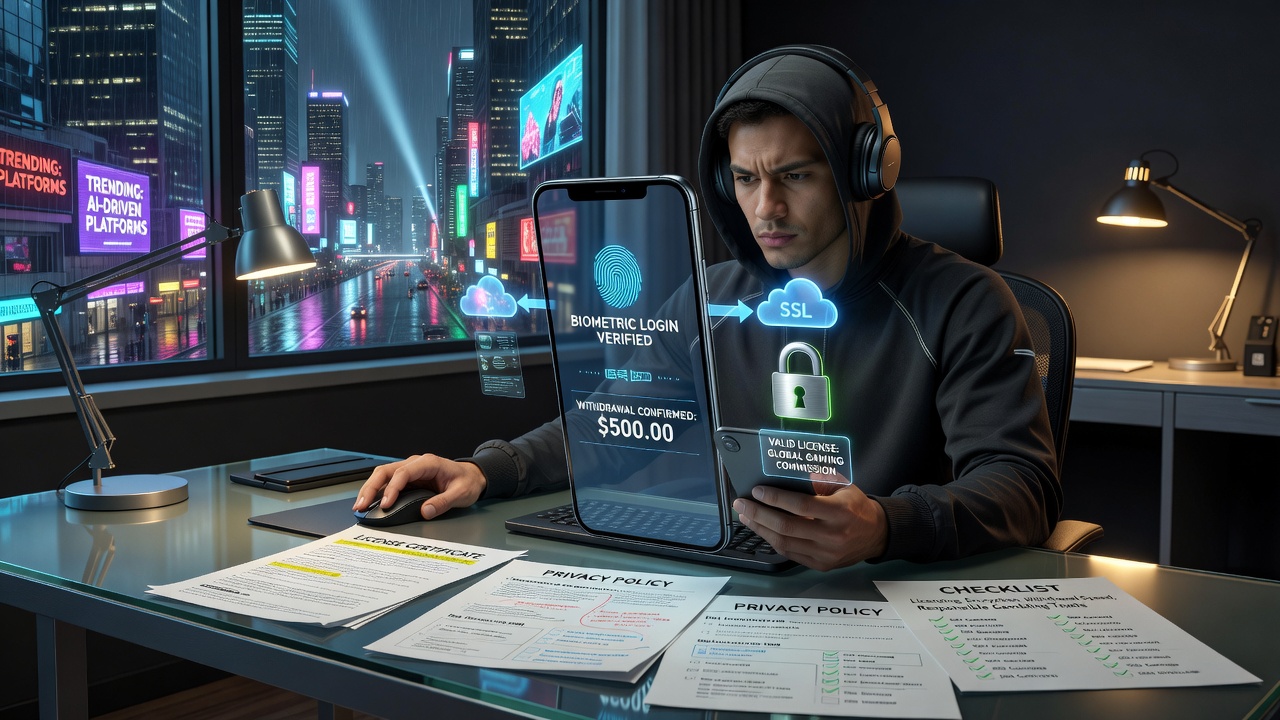
Roughly a third of complaints filed with gambling regulators involve platforms that were never properly licensed in the first place. That single fact explains why so many players lose money not to bad luck, but to bad due diligence. Choosing where to spend your time and your money online is not a casual decision - it's a technical one, involving encryption standards, jurisdictional oversight, and account security practices that most users never think to check.
The entertainment landscape has fragmented into thousands of platforms competing for attention, and not all of them play fair. Some operate without any regulatory backing at all, banking on the fact that most players won't ask hard questions before entering their card details. Others meet every legal requirement but handle personal data carelessly, leaving users exposed long after they've stopped visiting the site. Even seasoned players researching something as specific as valor predictions today can stumble into platforms that look polished but lack any real accountability behind the interface. Knowing the difference between a trustworthy operator and a convincing imitation takes more than a glance at the homepage.
This piece breaks down what actually matters: how licensing works, how to read the signs of a secure platform, what happens to your data and your account once you sign up, and where mobile entertainment is heading next.
Understanding Online Entertainment Licensing
How does online entertainment licensing work
A license is a formal agreement between an operator and a regulatory body that permits the platform to offer betting, gaming, or streaming services within a defined legal framework. The regulator sets rules covering fund protection, game fairness, advertising conduct, and dispute resolution, then audits the operator periodically to confirm compliance. Losing a license - or operating without one - usually means the platform has no legal obligation to pay out winnings, protect your data, or resolve complaints fairly.
Major regulatory bodies and what they actually check
Regulators differ significantly in rigor. Some jurisdictions require regular financial audits, proof of segregated player funds, and independent testing of random number generators. Others hand out licenses with minimal oversight, which is why the presence of a license alone isn't proof of safety - the issuing authority matters just as much as the license itself.
- Established regulators publish enforcement actions and fines publicly, giving you a track record to review
- Weaker regulators rarely revoke licenses even after repeated complaints
- Cross-border operators sometimes hold licenses in multiple jurisdictions to reassure different regional audiences
Why jurisdiction changes your legal protection
The country issuing the license determines which laws apply if something goes wrong. A platform licensed in a jurisdiction with strong consumer protection laws gives you legal recourse; one registered in a loosely regulated territory may leave you with no realistic way to recover funds or file a formal complaint.
How to Verify If an Online Casino Is Safe
Checking license numbers and regulator databases
Every legitimate operator displays a license number, typically in the footer of the site. Cross-reference that number directly on the regulator's official database rather than trusting a badge or logo, since images can be copied onto any website regardless of whether the license is real or current.
Reading independent reviews without falling for fake ones
Player forums and independent review aggregators reveal patterns that marketing pages never will - slow withdrawals, ignored support tickets, or sudden account closures right before a big payout. Treat overly polished five-star reviews with suspicion, especially when they appear in clusters shortly after a platform launches.
Testing customer support and withdrawal speed before committing real money
Before depositing anything substantial, send a support query and time the response. A platform that takes days to answer a basic question during the honeymoon phase will likely be far worse once you're trying to withdraw funds. Small test deposits and withdrawals reveal a lot about how a platform actually operates under real conditions.
Is This Online Entertainment Platform Safe? Key Red Flags to Watch
Signs of a secure connection and encrypted transactions
A secure platform encrypts every transaction and displays a valid SSL certificate, visible as a padlock icon in the browser address bar. Payment pages should never redirect to unencrypted domains, and any request for card details over an unsecured connection is an immediate warning sign.
Warning signs in terms and conditions
Vague withdrawal limits, unusually high wagering requirements, or clauses granting the operator unilateral rights to void winnings are common tactics used by platforms designed to extract deposits rather than pay them back. Reading the terms before signing up, not after a dispute arises, saves considerable frustration.
What should users know before joining an online gaming platform
Before creating an account, confirm the platform's licensing, read the withdrawal policy in full, and check whether identity verification is required upfront or only at withdrawal time - the latter is a common tactic used to delay payouts indefinitely.
- Verify the operator's registered company name, not just its brand name
- Check whether responsible gambling tools like deposit limits and self-exclusion are available
- Confirm which payment methods are supported and whether fees apply to withdrawals
Protecting Your Personal Information and Managing Your Account
How to protect personal information on entertainment websites
Use a unique password for every gaming account, enable two-factor authentication wherever it's offered, and avoid linking accounts to social media profiles that expose more personal data than necessary. Review the platform's privacy policy specifically for how long it retains your data and whether it shares information with third-party marketing partners.
How to delete an online casino account
Most regulated platforms require you to submit a formal closure request through account settings or customer support, since data protection laws typically prevent instant self-service deletion for accounts with financial history. Expect to confirm your identity and clear any pending balance before the closure is processed, and always request written confirmation once it's complete.
Can a deleted gaming account be reopened
It depends on whether the account was fully deleted or simply deactivated. A deactivated or self-excluded account can often be reinstated after a cooling-off period, while a fully deleted account - especially one erased under data protection requests - typically cannot be recovered and requires registering as a new user entirely.
Mobile Entertainment: Apps, Speed, and Accessibility
Entertainment apps for Android and iOS: what separates the good from the risky
Official app stores enforce baseline security reviews that sideloaded apps skip entirely, which is why downloading gaming apps outside Google Play or the Apple App Store carries meaningfully higher risk. Legitimate apps request only the permissions they need - camera access for identity verification, perhaps, but rarely access to your contacts or messages.
Can I use mobile entertainment services with a slow internet connection
Most modern platforms compress data intelligently, allowing basic play or streaming even on 3G-level connections, though live dealer games and high-definition video require a more stable connection to avoid disconnections mid-session. If your connection is unreliable, look for apps offering a lightweight or "lite" mode, which reduces data load without disabling core functionality.
What are the latest trends in mobile entertainment
Cloud-based gaming, where processing happens on remote servers rather than the device itself, is reducing the hardware requirements for high-quality graphics on mobile. Biometric login, AI-driven personalization of content feeds, and progressive web apps that behave like native apps without requiring installation are also reshaping how users interact with entertainment platforms.
- Cross-device syncing that lets users pick up sessions instantly between phone, tablet, and desktop
- Increased use of biometric authentication instead of passwords
- Growing integration of live-streamed content directly within gaming apps
Making the Final Decision
Balancing convenience against caution
The most convenient platform isn't always the safest one, and the reverse is equally true - a highly secure platform with a clunky interface will frustrate you into making mistakes, like reusing passwords or skipping verification steps. The right balance comes from platforms that combine strong licensing with genuinely usable design.
Building a personal checklist before signing up
Rather than trusting instinct alone, run through licensing, encryption, app permissions, and withdrawal terms every time you consider a new platform. This habit takes a few extra minutes but prevents the far larger time and financial cost of dealing with a platform that turns out to be unsafe.
Frequently Asked Questions
How can I tell if a gaming platform's license is currently active and not expired?
Visit the regulator's official website directly and search their public license database using the operator's registration number, which should be listed in the site's footer or terms page. An active license will show a current status and expiration date; if the number doesn't appear in the database at all, treat that as a serious red flag.
Is it safe to link my bank account directly to a gaming app?
Direct bank linking is generally safe on regulated, encrypted platforms, but using an intermediary payment method like an e-wallet adds a layer of separation between your bank details and the gaming site. This is particularly useful on newer platforms where you haven't yet built confidence in their security practices.
What happens to my deposited funds if a platform loses its license?
Regulated operators are typically required to hold player funds in segregated accounts, separate from operating capital, which protects deposits even if the license is revoked. Unregulated platforms offer no such guarantee, and recovering funds in that scenario is often impossible.
Why do some apps ask for identity verification only when I try to withdraw?
This practice, sometimes used to delay or discourage payouts, forces users to submit documents after they've already committed time and money to the platform. Reputable operators verify identity during signup or shortly after, so a sudden verification demand at withdrawal time is worth treating with suspicion.
Does closing my account remove my data from a platform's servers immediately?
Not necessarily - many jurisdictions require operators to retain certain financial and identity records for a set period, often several years, for anti-fraud and tax compliance purposes. Full data deletion typically happens only after that retention period expires, unless you submit a specific data erasure request under applicable privacy law.
Are progressive web apps safer than downloading a native app?
Progressive web apps run through the browser and don't require installation, which can reduce exposure to malicious code sometimes found in sideloaded files. That said, safety ultimately depends more on the operator's legitimacy than the app format itself, so licensing and reputation checks still matter most.