
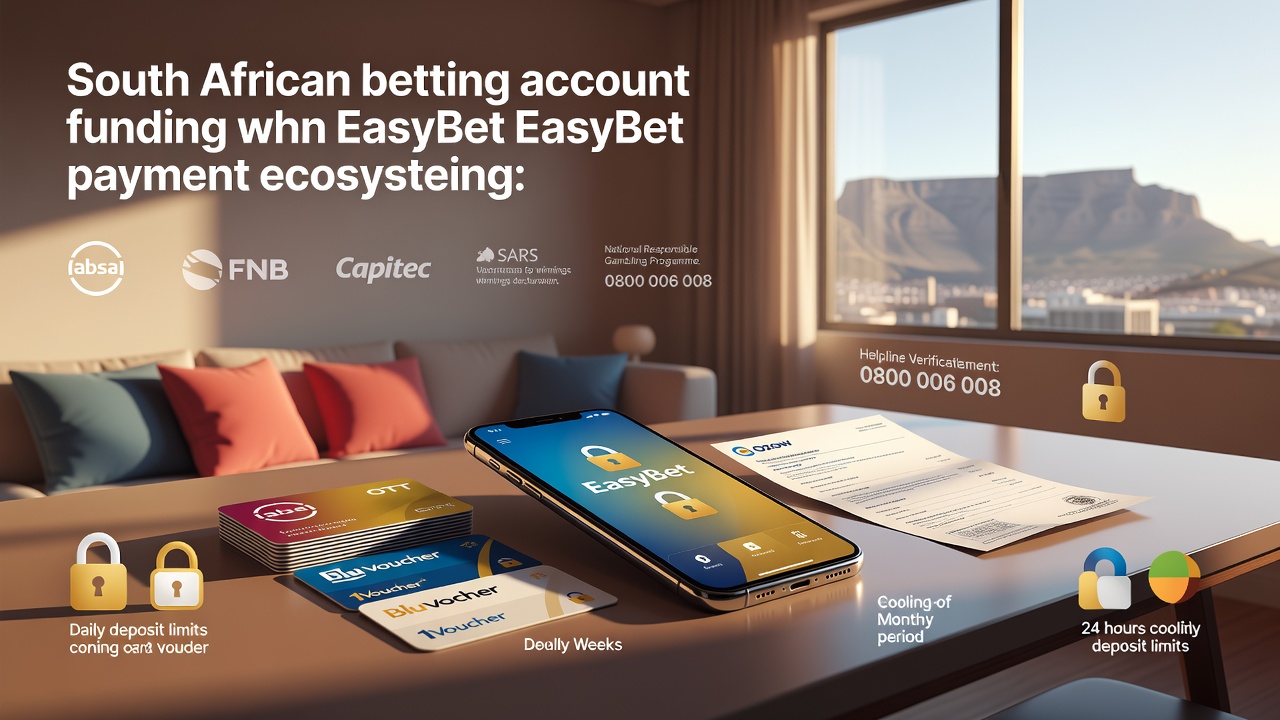
Funding a betting account in South Africa has become a matter of minutes rather than days, and the mechanics behind that speed say as much about the local payments landscape as they do about any single operator. EasyBet's deposit system draws on a cluster of domestic payment rails - bank-linked transfers, card networks, vouchers, and mobile wallets - that together reflect how South African consumers actually move money, rather than forcing them into international payment infrastructure built for other markets.
Why local payment rails matter
South Africa's online betting sector has grown alongside a parallel boom in fintech tools designed for a population where not everyone holds a credit card or feels comfortable linking one to a gambling account. Instant EFT and Ozow solve this by routing payments through a user's own online banking login, meaning the operator never stores card credentials and the bank's own security layer handles authentication. That structure tends to carry higher transaction limits than card or voucher methods, which is why it has become the default choice for larger or recurring deposits.
Voucher-based systems such as OTT, Blu Voucher, and 1Voucher serve a different purpose entirely. Bought upfront at a retailer or online, they let a user cap spending to a fixed, pre-purchased amount with no bank account or card linked to the platform at all. For some bettors, that separation is a deliberate budgeting choice rather than a convenience preference - it limits exposure by design.
Cards, mobile wallets, and the friction points operators don't control
Card deposits via Visa or Mastercard function much like any online purchase, but South African banks sometimes flag gambling-coded merchant transactions for extra verification or automatic decline. This isn't a policy choice by the betting operator - it reflects each bank's own risk controls, and it's a friction point worth knowing about before assuming a failed deposit is a platform error.
Mobile-based options like Snapscan, Zapper, and Easyload run through existing phone apps or airtime balances, suiting smaller, more frequent top-ups rather than single large transactions. Combined with data-free app access on supported networks, the deposit step itself typically doesn't draw on a user's mobile data - though third-party steps like a bank's authentication screen may.
Verification, limits, and the responsible gambling layer
Most deposit methods don't require documentation upfront. FICA verification only becomes relevant at withdrawal stage, which lets new users start betting immediately after a first successful deposit - a design choice that speeds onboarding but places the compliance checkpoint later in the user journey rather than earlier.
Deposit limits offer a built-in control mechanism. Lowering a daily, weekly, or monthly limit takes effect immediately, but raising one triggers a 24-hour cooling-off period requiring a second confirmation once the window passes. That friction is intentional: it's a standard responsible gambling safeguard found across regulated operators, designed to prevent impulsive increases to spending caps during an active session.
- Deposits aren't taxed, but winnings fall under normal income reporting obligations to SARS, which the account holder - not the operator - is responsible for declaring.
- EasyBet doesn't charge deposit fees, though third-party card issuers may apply their own processing charges independently.
- Failed or delayed deposits are most often resolved by checking bank statements, refreshing the balance, or confirming voucher codes before contacting support.
The broader picture
None of this changes the underlying nature of betting as a product with inherent risk. Easy access to deposits is a convenience feature, not a signal about outcomes, and no payment method changes the odds a bettor faces. Anyone noticing signs of harm - hiding gambling activity, using essential funds, an inability to stop - can contact South Africa's National Responsible Gambling Programme on its toll-free helpline, 0800 006 008, or use self-exclusion tools offered by licensed operators.