
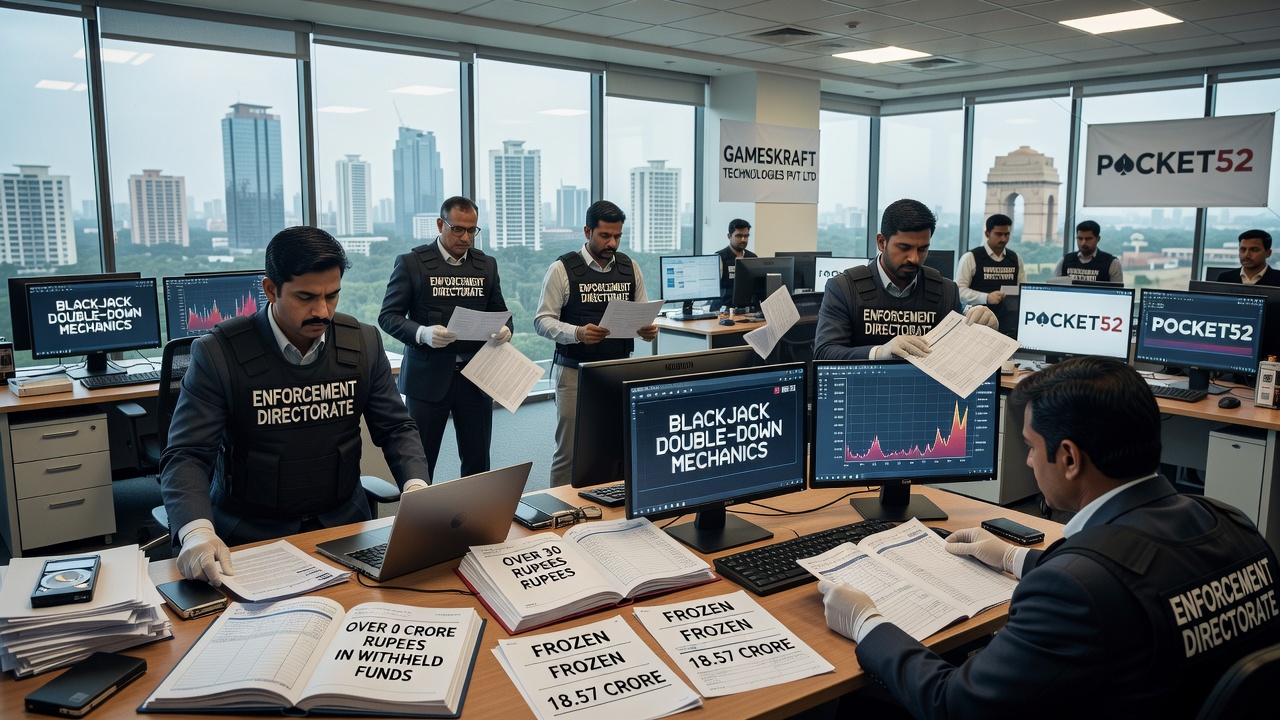
The Enforcement Directorate carried out coordinated search operations across Delhi-NCR, Bengaluru and other locations on Thursday, May 7, escalating an investigation into an alleged ₹1,000 crore money laundering case tied to online gaming and betting activity. The raids, led by the agency's Bengaluru Zonal Office, targeted M/s Gameskraft Technologies Pvt Ltd, its directors and several individuals connected to disputed online betting operations. Officials said they collected documents, digital records and electronic evidence as the probe under the Prevention of Money Laundering Act continues.
This is not the ED's first encounter with Gameskraft. A separate round of searches last year examined different allegations against the company, and authorities have now confirmed that the current action relates to a distinct matter altogether. Online card and betting platforms often draw regulatory attention precisely because the line between skill-based games and games of chance is contested - a distinction that matters legally, since it determines whether an activity falls under gambling law or is treated as a game of skill. For readers unfamiliar with how such games actually operate, understanding basic mechanics - for instance, what is double down in blackjack - can help clarify why regulators scrutinize platform design, payout structures and player incentives so closely.
The origins of the case trace back to multiple FIRs filed with local police stations in Bengaluru, which were subsequently transferred to the ED for a money laundering investigation. A related set of searches conducted between November 18 and 22 last year focused on M/s Nirdesa Networks Pvt Ltd and Gameskraft Technologies, centering on the gaming platform Pocket52, which NNPL operated.
Allegations of Manipulation and Withheld Funds
Karnataka Police FIRs alleged that Pocket52 manipulated game outcomes, permitted collusion between players, restricted withdrawals and operated without adequate transparency. One complainant reportedly reported losses exceeding ₹3 crore, while other users flagged concerns about algorithmic interference in game results. The ED has alleged that the company was aware of these practices and did not compensate affected users, a claim that, if substantiated, would point to systemic issues in platform governance rather than isolated incidents.
Escrow Accounts and Regulatory Gaps
A central element of the case involves escrow accounts meant to safeguard user funds. Despite restrictions introduced under the Online Gaming Promotion and Regulation Act, 2025, the ED found that more than ₹30 crore remained undistributed to gamers and customers. The agency has since frozen eight escrow accounts holding an estimated ₹18.57 crore, treating the funds as suspected proceeds of crime. Escrow mechanisms exist specifically to protect consumers by ring-fencing deposits from operational funds - when that separation fails or funds are withheld, it undermines the basic trust structure that regulated gaming platforms are supposed to guarantee.
What This Means for the Sector
The case illustrates the regulatory pressure building around India's online gaming and betting industry, particularly as new legislation attempts to formalize oversight of platforms handling real-money transactions. For operators, it signals tighter scrutiny of fund segregation, withdrawal practices and algorithmic transparency. For consumers, it reinforces a broader point applicable across all betting and gaming products: platform legitimacy, licensing status and fund-handling practices matter as much as game design, and losses on unregulated or poorly governed platforms may not be recoverable through ordinary consumer channels.